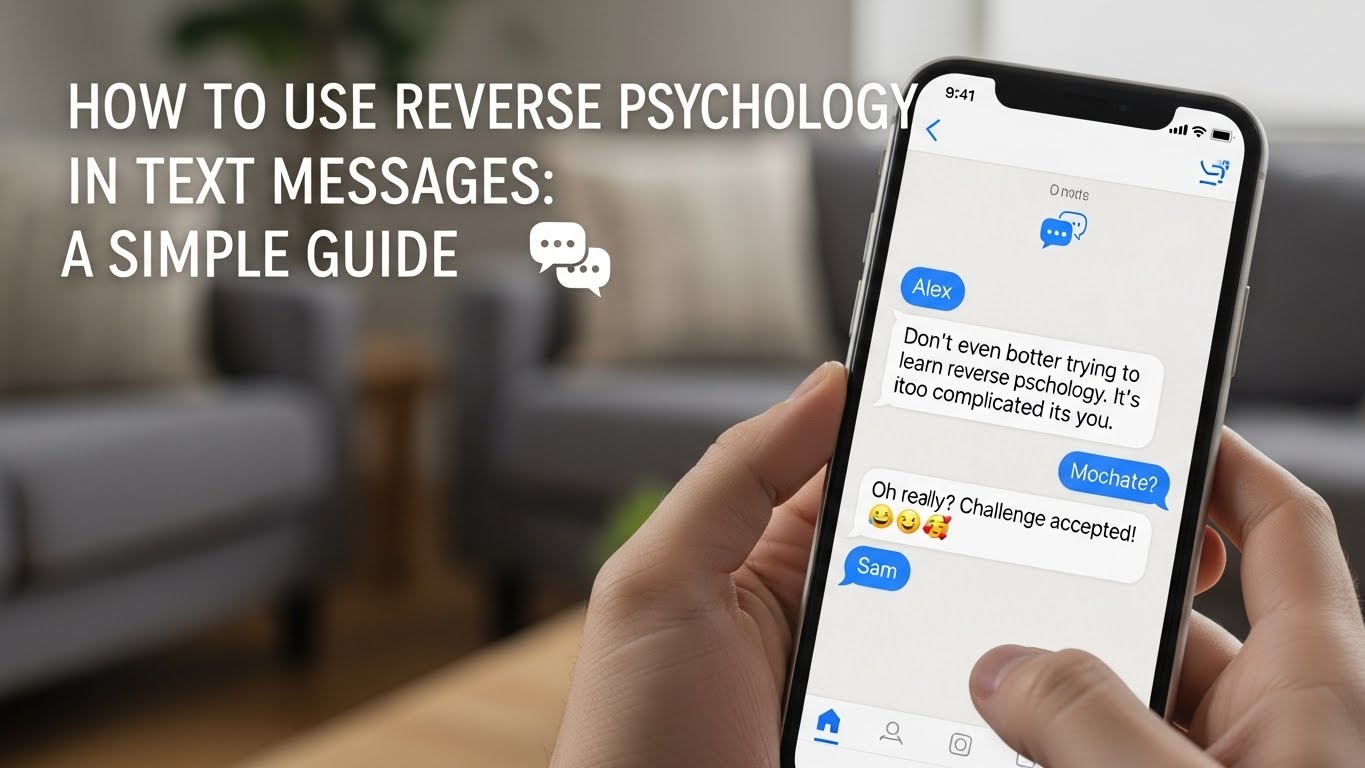
How to Use Reverse Psychology in Text Messages: A Simple Guide
11/26/2025 • Admin
How to Use Reverse Psychology in Text Messages: A Simple Guide
Reverse psychology is a powerful psychological tactic where you persuade someone to do something by suggesting they do the opposite. But how does it work in the context of text messaging? Whether you're trying to influence a friend, get someone’s attention, or encourage a specific behavior, reverse psychology in text messages can be a highly effective tool. In this guide, we’ll walk you through the basics of reverse psychology and how you can apply it in your text conversations.
What is Reverse Psychology?
Reverse psychology involves convincing someone to do something by telling them to do the opposite. It’s based on the idea of reactance, which is the psychological response to perceived threats to one’s freedom of choice. When people feel like they are being forced to do something, they often want to do the opposite as a way to regain control.
While reverse psychology is often used in marketing and parenting, it’s also a popular tactic in everyday communication. So, how do you apply this technique in text messages?
How Reverse Psychology Works in Text Messages
In text messaging, reverse psychology can be incredibly powerful. It works because people tend to act in ways that affirm their sense of independence and choice. By suggesting the opposite of what you want, you trigger a sense of defiance that makes the person more likely to do what you originally wanted.
Here’s a quick breakdown of how it works:
- Suggest the opposite: Instead of asking someone to do something directly, suggest the opposite. This sparks a reaction where they feel compelled to prove you wrong.
- Appeal to their autonomy: People don’t like being told what to do. When using reverse psychology, you subtly encourage them to make their own decision, even if that decision aligns with your original request.
- Be subtle: If you’re too obvious about using reverse psychology, it can backfire. The key is to be subtle and nonchalant about it.
Practical Examples of Reverse Psychology in Text Messages
Now, let’s look at some real-world examples of reverse psychology text messages:
Example 1: Getting Someone to Respond
If you’ve texted someone and they’re not responding, you can use reverse psychology to encourage a reply. Instead of directly asking why they haven’t responded, you can say something like:
"I guess you’re too busy to text back, huh?"
This makes the person feel as though they need to prove you wrong by responding.
Example 2: Encouraging Someone to Go to an Event
If you’re trying to convince someone to attend an event but they’re hesitant, you might say:
"I completely understand if you don’t want to come. I mean, it’s not like you’d have fun or anything."
This suggestion implies that they might miss out on something fun, prompting them to prove you wrong by attending.
Example 3: Getting Someone to Make a Decision
If someone is indecisive, you can subtly nudge them toward a decision by using reverse psychology:
"If you can’t decide, it’s probably best to just forget about it."
This approach taps into their desire to prove that they can make decisions, nudging them toward a choice.
Tips for Using Reverse Psychology Effectively in Text
- Be confident: If you’re unsure or hesitant in your message, it will come across as manipulative. Confidence is key.
- Know your audience: Reverse psychology works best when you know the person’s personality. It’s more effective on people who have a tendency to be stubborn or defiant.
- Use it sparingly: Overusing reverse psychology can make you seem insincere or manipulative. Use it in moderation to keep your text conversations natural.
When Not to Use Reverse Psychology
While reverse psychology can be effective, it’s not always appropriate. Avoid using it in situations where:
- Trust is important: Manipulating someone’s behavior can undermine trust, so avoid reverse psychology in sensitive relationships.
- It’s used for serious matters: Reverse psychology should never be used for life-changing decisions or serious situations. It’s better suited for light-hearted or casual situations.
Conclusion
Reverse psychology in text messages can be an incredibly effective tool when used appropriately. It helps influence others by leveraging their natural desire to maintain control and prove themselves. Whether you’re trying to get someone to respond, attend an event, or make a decision, reverse psychology can give you the upper hand in a subtle, persuasive way.
If you're looking to improve your persuasive skills or learn more about psychology in everyday communication, visit FormatPilot for helpful resources and tools.
FAQs
What is reverse psychology in text messages?
Reverse psychology is a technique where you suggest the opposite of what you want, triggering a desire in someone to do the opposite of what you suggested.
How do you use reverse psychology in text?
To use reverse psychology in text, suggest the opposite of what you want, making the person feel compelled to prove you wrong.
Can reverse psychology backfire in text messages?
Yes, if overused or used inappropriately, reverse psychology can come off as manipulative or insincere, damaging the relationship.
When is reverse psychology effective in text messaging?
Reverse psychology is most effective when used with people who are independent, stubborn, or enjoy proving others wrong.
Is reverse psychology ethical in texting?
As long as it’s used sparingly and not for harmful purposes, reverse psychology can be a fun and harmless way to influence decisions or get a response.